Make do and Mend
My maternal grandmother was a guiding influence in my childhood. I learned jam-making from her, a skill I still teach every year because of my work on food security. I suspect the British government’s “make do and mend” campaigns during World War II shaped her beliefs. The campaigns encouraged women to reduce consumption and made frugality an important part of how women could contribute to the war effort. Especially by extending the life of clothes, or by making their own.
That “make do and mend” attitude is part of why I love patchwork quilts. The very first quilts were made from whole cloth. These were just simple pieces of fabric with batting and a backing, held together with ties or rudimentary stitching. Early quilts used wool batting, requiring closely worked stitching to prevent the padding from bunching. The oldest examples date from the twelfth century. The texture of whole-cloth quilts comes entirely from the stitching.
But over time patchwork quilts replaced whole-cloth quilts. Women, especially in the colonies, only had limited access to large pieces of fabric, so they developed block patchwork to use all available fabric scraps and assemble enough pieces for a quilt.
Patchwork quilts turned “make do” into an art form. Frugality became the constraint that inspired creativity.
I had never been a quilter; I’m still not, but I admire them greatly. While I was pregnant, I spent eight months working on a crazy quilt and spent hours frequenting fabric stores and reading books on quilting. I stockpiled fat quarters; they were part of the fantasy I was weaving for myself, that I would be the kind of creative mother who could make-do and mend. The reality turned out to be somewhat harder.
The Patchwork Quilt: Piecing an Identity Together explores how it’s easy to lose one’s sense of identity in the demands of being a new mother, and how I tried to hold on to one tiny piece of my old self.
You can read the essay at Literary Mama here.
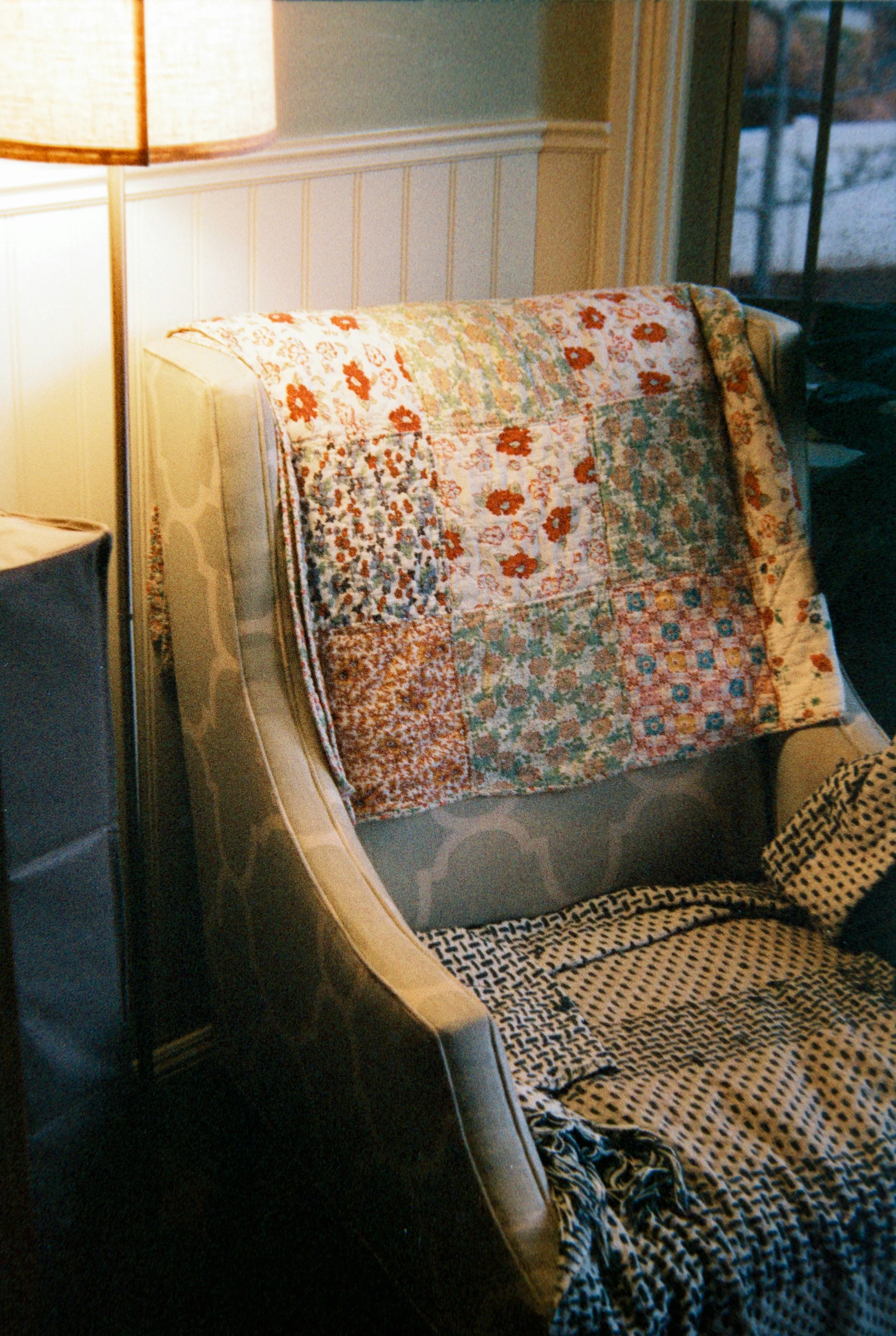
Photo by Spencer Plouzek on Unsplash